

Your shopping cart is empty.
30 years of manufacturing experience, serving 3 countries. Whatever your vessel, plant, or facility needs, RXSOL has you covered.
MSDS, COA and TDS documents are available for all RXSOL products. For product-specific queries, our technical team is available via WhatsApp or email.
Get My 50% Discount — Order Now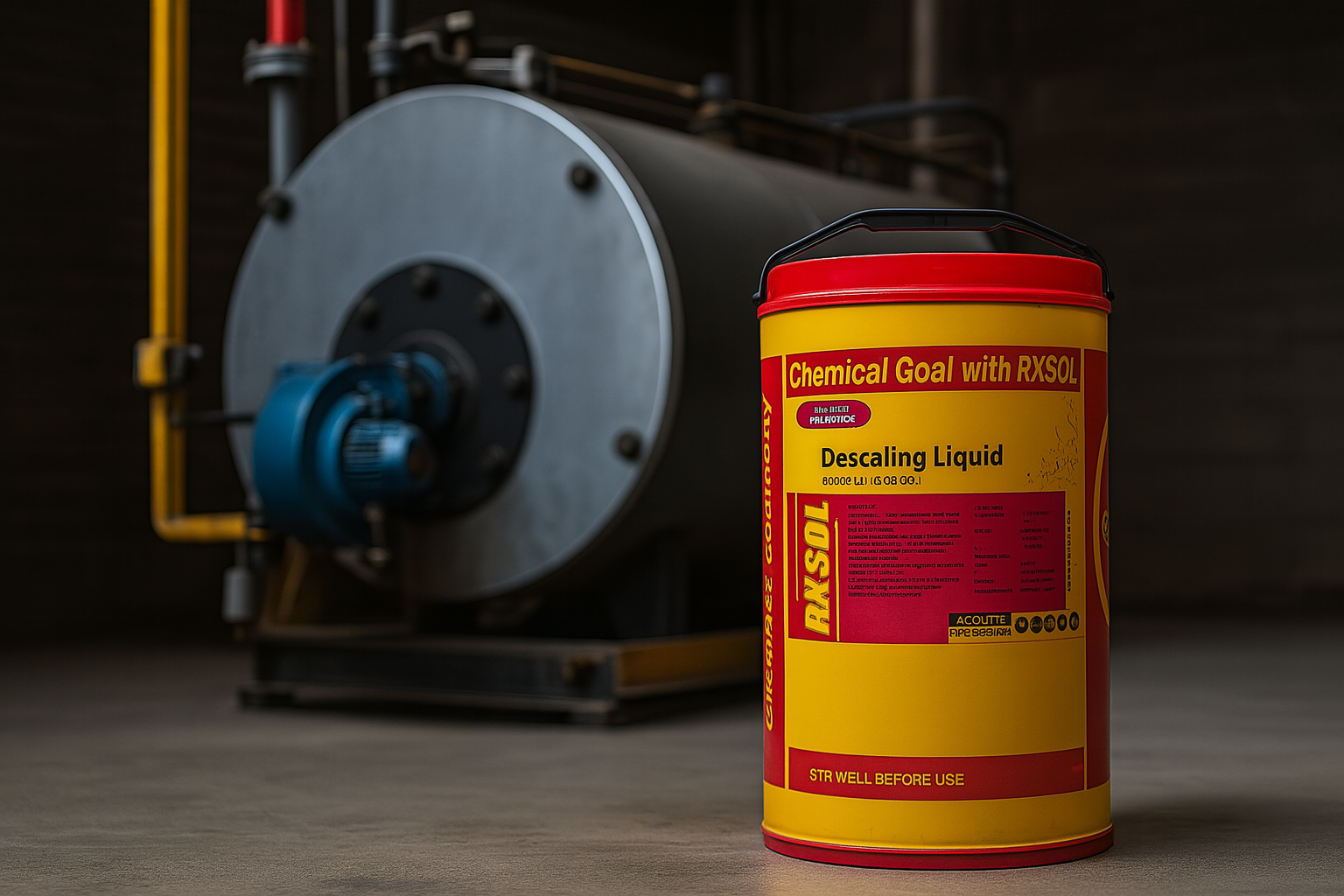
Specialized formulatory products for efficient maintenance of boiler units and chiller plants of industries.
View All Water Treatment Chemicals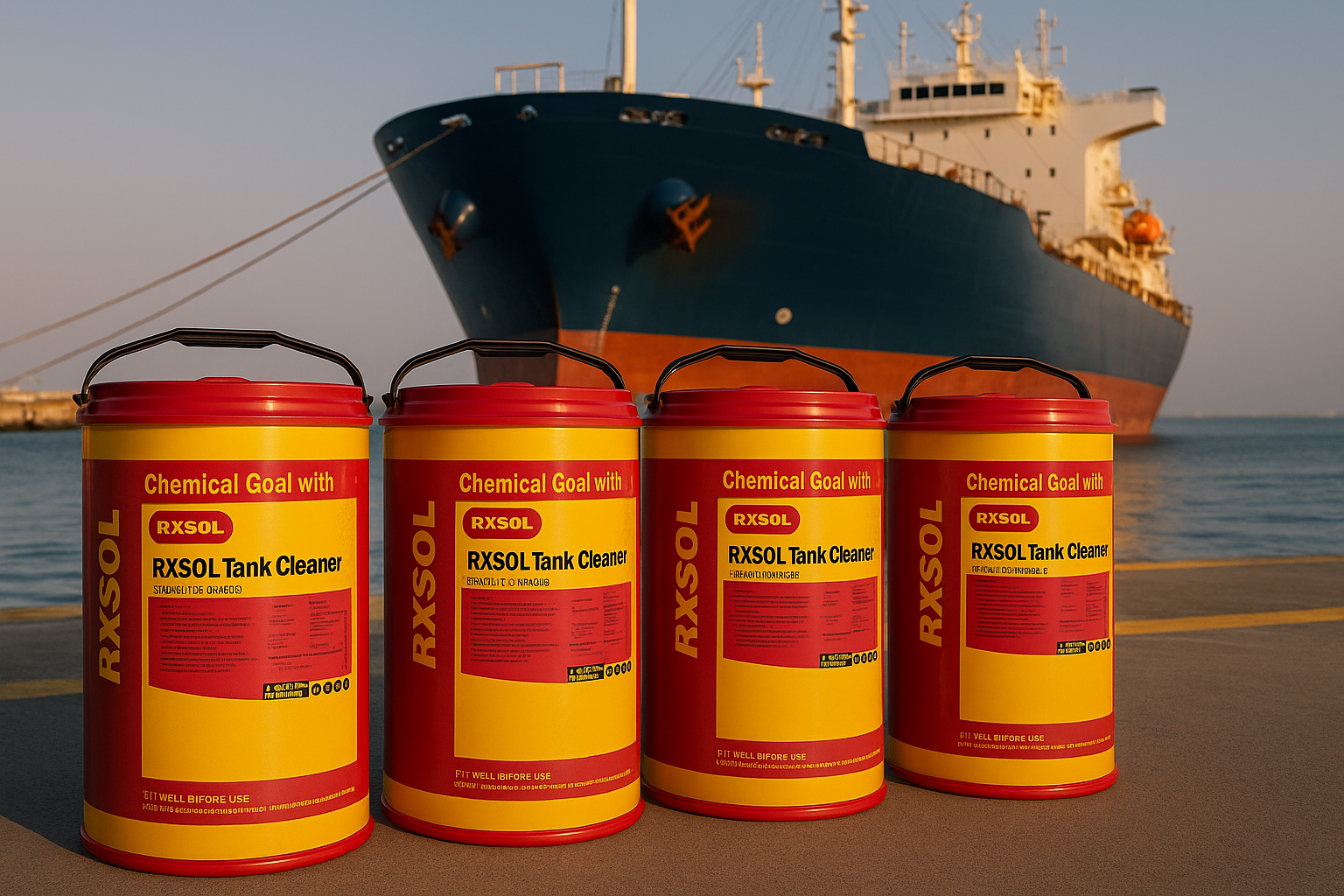
One STOP manufacturer for all of vessel's chemical needs - chemicals, test kits, applicators, etc
View All Marine Chemicals
Ready stock of fast-running chemical raw materials in 6 key locations of India
View All ChemicalsProduct Code: RXSOL-16-1681-025
DISSOLVES SLUDGE THAT BUILDS UP IN HEAT EXCHANGERS: HEAT EXCHANGER CLEANER is a liquid POLYMER - Acidic based new generation material that readily dissolves sludge that builds up in heat exchangers.
DESCALANT is specially formulated to clean and remove scale and microorganism as well as the growth of algae, humus, mussels, shellfish etc and also effectively dissolve magnetite, lime, rust and other deposits from water systems, Descalant most commonly used to clean heat exchangers and centrifugal separators.
HEAT EXCHANGER CLEANER:
PRETREATMENT TECHNICAL DATA SHEET:
USE & CONTROL INSTRUCTIONS:
Operating Properties (Typical):
| Application: | Maintenance product – special application Circulating the product through the heat exchanger. |
| OperatingConcentration: | Free Acid: 0.9 - 1.7 points |
| Operating temperature: | Ambient |
| Operating time: | Typically at least 30 minutes. |
Specific process conditions may warrant operating the above parameters outside of the typical ranges. Please consult your RX MARINE representative:
Charge Instructions:
HEAT EXCHANGER CLEANER is used as delivered at ambient temperatures. If time is not a factor in the clean out, the solution can be diluted up to 50% with water.
Charge details:
1) If used at the 50% dilution: Fill the clean tank approximately ½ full with fresh water.
2) Set valves to proper setting for clean out
3) Plumb the circulating system to the correct side of the heat exchanger Turn on.
4) Slowly add 1 gallon of HEAT EXCHANGER CLEANER for every two gallons of bath (or use the HEAT EXCHANGER CLEANER neat)
5) Allow to circulate for at least ½ hour dependent on sludge.
6) Turn off pump and disconnect plumbing from heat exchanger
7) Flush heat changer with fresh water to remove residual acid.
8) Turn heat exchanger valves back to running positions.
It is important to circulate the solution through the heat exchanger for at least 30 minutes. The cleaning time will vary depending on the amount and type of sludge build-up. After the heat exchanger is cleaned, it is highly recommended that the unit be flushed with water. If this step is not taken, an increase in the free acid of the operating phosphate solution might occur.
PRETREATMENT TECHNICAL DATA SHEET:
Analysis Procedures:
CAUTION: DO NOT PIPETTE BY MOUTH ::: Free Acid
Equipment needed:::
• Burette Assembly
• 5-ml pipette and bulb
• 250-ml flask or beaker
• 100 ml graduated cylinder
Reagents needed:::
• Bromophenol Blue indicator
• 1.0N Sodium Hydroxide
Free Acid Procedure:
1. Using a pipette, pipette 5-ml of your solution into a 100-ml graduated cylinder. Fill the cylinder to the 100 ml mark with DI or RO water, then mix by up ending 2-3 times.
2. Pipette 5 ml of the above dilution to a beaker or flask; add 4-5 drops of Bromophenol Blue indicator. Then add 1.0N Sodium Hydroxide drop-wise until the
solution changes from yellow to blue. Record the number of mls as points of Free Acid.
The concentration is calculated by multiplying the points of Free Acid times the HEAT EXCHANGER CLEANER factor 0.59. This equals the concentration in percent by volume
of HEAT EXCHANGER CLEANER in solution. Points of Free Acid X 59 = Percent by volume of HEAT EXCHANGER CLEANER
PRTREATMENT TECHNICAL DATA SHEET:
|
Points of Free Acid |
Concentration of HEAT EXCHANGER CLEANER in percent by volume |
Addition of HEAT EXCHANGER CLEANER per 100 gallons of tank volume (based on using HEAT EXCHANGER CLEANER at 50%) |
| 1.7 | 125% | 0 |
| 1.3 | 100% | 0 |
| 0.85 | 50% | 0 |
| 0.4 | 25% | 25 gallons |
| 0.2 | 12.5% |
37.05 gallons |
Equipment:
The HEAT EXCHANGER CLEANER is used for cleaning Stainless steel heat exchangers.The external pump and circulating system employing the HEAT EXCHANGER CLEANER should likewise be made of stainless steel or of a suitable, non-corrosive plastic.
RXSOL brand chemical for industrial cleaning, descaling, rust removal, heat-exchanger cleaning, boiler maintenance, thermic-fluid-system cleaning, MS tank cleaning and pipeline cleaning chemicals.
RXSOL offers specialized chemical solutions for industrial maintenance where scale, rust, corrosion deposits, sludge, oil, grease and process contamination can reduce equipment efficiency and restrict circulation.
RXSOL product information includes dedicated products for heat-exchanger cleaning, boiler maintenance, scale removal and industrial tank cleaning. (Rx Solutions)
#HeatExchangerCleaner_ManufacturerSupplier
#HeatExchangerCleaner_MumbaiDubaiMuscatSurat
#HeatExchangerCleaningChemical_BiharVaranashiGandhidhamKolkataChennaiVizag
Secondary Heating System Cleaner and Scale Remover
Heat exchangers can accumulate:
Mineral scale
Rust and iron oxide
Sludge
Oil and grease
Process deposits
Carbonaceous contamination
Water-side deposits
RXSOL provides different cleaning chemicals depending on the type of deposit, equipment metallurgy and cleaning method.
For example, RXSOL lists Heat Exchanger Cleaner RXSOL-16-1681-025, along with dedicated heat-exchanger products such as Heat Exchanger Cleaner Caus and Heat Exchanger PhosClean. (Rxchemicals)
For rust and corrosion deposits, RXSOL also offers a rust-removal product intended for suitable evaporators, heat exchangers and boilers. (RxMarine)
Thermic-fluid heating systems may develop deposits resulting from:
Thermal degradation
Oxidation
Carbonaceous deposits
Sludge
Oil contamination
Circulation problems
RXSOL cleaning chemistry can be selected according to the thermic-fluid type, deposit condition and system construction.
Before chemical cleaning, the existing thermic fluid should be identified and the system evaluated for compatibility.
Steam boilers and heating coils can develop scale, rust, sludge and corrosion deposits, particularly when water treatment and operating conditions allow deposits to accumulate.
RXSOL offers products for boiler maintenance and scale/corrosion control, including Corrosion Scale Treatment Boiler – RXSOL-42-4029-025, sludge-conditioning products and specialized scale-removal chemistry. (Rx Solutions)
The correct chemical should be selected based on whether the contamination is primarily:
Calcium scale
Silica/silicate scale
Iron oxide/rust
Oil contamination
Sludge
Mixed deposits
Mild-steel tanks may require chemical cleaning before:
Inspection
Maintenance
Repainting
Product changeover
Commissioning
Repair
Storage of a new product
RXSOL cleaning products can be selected for oil, grease, hydrocarbon, rust, scale and general industrial contamination.
For tank cleaning, the chemical selection should always consider the previous cargo or stored material.
RXSOL chemicals can be used in suitable pipeline-cleaning programs for removing:
Rust
Scale
Oil
Grease
Sludge
Process deposits
Hydrocarbon residues
Pipeline cleaning can be carried out by suitable circulation, soaking, flushing or recirculation methods, depending on the pipe diameter, deposit and available equipment.
| Cleaning Requirement | Suitable RXSOL Chemical Category |
|---|---|
| Heat exchanger scale | Descaling / scale-removal chemical |
| Heat exchanger rust | Rust & corrosion deposit remover |
| Oil-side heat exchanger contamination | Heavy-duty degreasing / tank cleaner |
| Boiler scale | Boiler descaling chemical |
| Boiler sludge | Sludge conditioner / boiler cleaner |
| Silica/silicate scale | Silica scale remover |
| MS tank oil/grease | Heavy-duty tank cleaner / degreaser |
| Pipeline rust | Suitable rust remover |
| Pipeline mineral scale | Suitable descaling chemical |
| Hydrocarbon deposits | Hydrocarbon / solvent cleaning chemical |
RXSOL's product range includes a silica-scale remover specifically described for heat exchangers, condensers and boiler tubes. (Rx Solutions)
A typical industrial cleaning program may include:
Inspection → Deposit identification → Pre-flushing → Chemical circulation/soaking → Monitoring → Drainage → Water rinsing → Inspection → Neutralization/passivation where applicable
The exact concentration, temperature and contact time should not be selected from a generic internet recommendation. They should be established from the applicable RXSOL TDS/SDS and the equipment manufacturer's requirements.
For example, certain RXSOL tank/heat-exchanger cleaning procedures use recirculation with controlled temperature and subsequent thorough water rinsing. (Scale Remover)
There is no single cleaning chemical that is automatically suitable for every industrial deposit.
For example:
Calcium carbonate scale ≠ silica scale ≠ rust ≠ oil sludge ≠ carbon deposit.
Using the wrong chemical can result in poor cleaning or unnecessary risk to:
Mild steel
Stainless steel
Copper
Brass
Aluminum
Rubber seals
Gaskets
Coatings
Linings
Therefore, RXSOL recommends selecting the cleaning chemical according to the deposit and metallurgy.
RXSOL chemical products are available for industrial customers in the Panvel, Taloja, Kalamboli, Kamothe, Navi Mumbai and surrounding industrial areas.
RX CHEMICAL RXSOL RX MARINE is listed in the MIDC Pawane/TTC Industrial Area of Navi Mumbai, while other chemical businesses are located across the Panvel–Taloja industrial belt.
RXSOL cleaning chemicals can be considered for:
Chemical plants
Pharmaceutical industries
Process industries
Manufacturing units
Boilers and steam systems
HVAC and cooling systems
Heat-exchanger maintenance
Oil and gas facilities
Marine industries
Engineering workshops
Storage terminals
Tank farms
Industrial utilities
The appropriate chemical depends on the deposit. RXSOL has dedicated heat-exchanger cleaners and separate chemistry for rust, mineral scale, silica scale and oily contamination. (Rx Solutions)
The selection depends on whether the boiler coil contains mineral scale, silica, rust, sludge or another deposit. RXSOL offers dedicated boiler and scale-treatment products. (Rx Solutions)
Suitable RXSOL tank-cleaning and rust/scale-removal products can be selected for MS tanks depending on the contamination and condition of the tank.
Yes, suitable RXSOL cleaning chemistry can be selected for pipeline descaling, rust removal, degreasing or sludge removal depending on the deposit and pipe material.
RXSOL chemicals can be supplied to industrial customers in Panvel, Taloja, Kalamboli, Kamothe and Navi Mumbai, subject to product availability and packaging.
For heat exchanger cleaning, thermic fluid system cleaning, steam boiler coil cleaning, MS tank cleaning and industrial pipeline cleaning, share the following information with the chemical enquiry:
Equipment: Heat exchanger / boiler / thermic-fluid system / tank / pipeline
Material: MS / SS / copper / aluminum / other
Deposit: Scale / rust / oil / sludge / carbon / mixed
Equipment capacity: ___
Cleaning method: Circulation / soaking / spray / CIP
Temperature: ___
Previous chemical/product: ___
The wording above deliberately avoids claiming that one chemical cleans every type of heat exchanger, thermic-fluid system, boiler, tank and pipeline; the RXSOL product range itself contains different cleaners for different deposits and applications. (Rx Solutions)
Heat Exchanger Cleaner manufacturer supplier distributor in Mumbai, Kandla, Kolkata, Vizag, Chennai, India, Fujairah, Dubai UAE, Muscat Oman, Kenya Africa. Get the best quality of Heat Exchanger Cleaner at a competitive price from us. We have ready stock of Heat Exchanger Cleaner in India, UAE Gulf, Oman, Kenya Africa. Contact us for bulk as well as small orders.
Oman, Bahrain, Abu Dhabi, Ajman, Al Ain, Dubai, Ras Al-Khaimah, Fujairah, Sharjah, Umm Al Quwain, Ruwais, Mina Zayed, Khalifa Port, Kizad, Jebel Ali, Port Rashid, Khor Fakkan, Sharjah Creek, Port of Hamriyah, Mussafah Port, Saqr Port, Dibba Port, Jebel Dhanna, Mina Al Hamriya, and all major UAE ports.